
The rise of AI chatbots has transformed the way businesses interact, promising efficiency and round-the-clock customer service. Yet, for many companies, the path to implementing a chatbot comes with surprises—unexpected costs, confusing fee structures and add-ons that make budgeting tricky. That’s why a clear, thorough cost analysis is essential.
Read on to uncover how to get the best cost analysis from Chatbots AIs by examining every factor that influences pricing, common pitfalls to watch out for and tips for making a smart, informed choice.
Why Cost Analysis for Chatbots AIs Is Essential for Businesses
With the growing implementation of AI chatbots by companies for customer service, marketing, and internal functions, grasping the total costs associated has become more essential than ever. A chatbot might seem like a simple investment, yet without a thorough cost assessment, unforeseen costs can accumulate.
Cost analysis assists companies in detailing all the costs linked to chatbot implementation, covering initial setup and ongoing maintenance. Companies can more effectively distribute their budgets, prepare for what lies ahead, and steer clear of unwelcome surprises.
Crucially, having a thorough understanding of expenses enables businesses to select the chatbot solution that best fits their requirements—be it a simple rule-based model or a sophisticated AI-powered system.
An in-depth cost evaluation aids in contrasting providers and discovering competitive rates. Companies can negotiate more efficiently, clarify support and maintenance charges, and guarantee they are receiving the best value for their expenditure by comprehending the actual costs associated.
Comparing Different Types of Chatbot Solutions
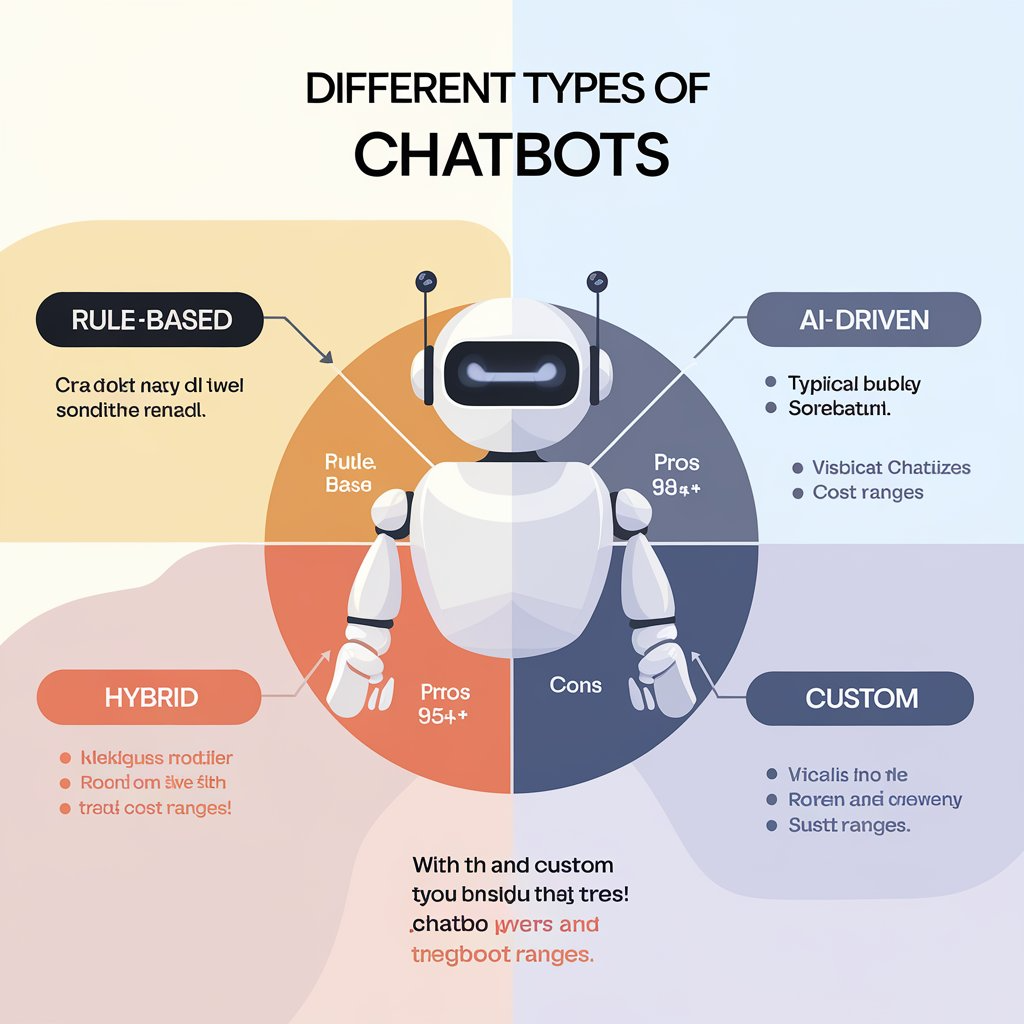
When selecting a chatbot solution, a single approach doesn’t suit everyone. The type of chatbot significantly influences its cost and capabilities. Grasping the distinctions among different chatbot models can assist companies in choosing the choice that most effectively suits their requirements without excessive expenditure. Here’s a detailed examination of the primary categories:
1. Rule-Based Chatbots
- Overview: Rule-based chatbots operate on predefined scripts and flows. They follow a set of rules and can respond to specific keywords or questions.
- Pros: These chatbots are relatively inexpensive to build and maintain, as they don’t rely on complex algorithms. They work well for simple, repetitive tasks.
- Cons: Limited flexibility. They can’t handle nuanced conversations or adapt to unusual questions.
- Best For: Businesses needing a straightforward solution for tasks like answering FAQs or simple lead generation.
- Cost Factor: Generally lower, with minimal ongoing maintenance.
2. AI-Driven Chatbots
- Overview: AI-driven chatbots use natural language processing (NLP) and machine learning to understand and respond to user inputs in a more human-like way. They can learn and improve over time, making them ideal for more complex interactions.
- Pros: Capable of understanding context, handling complex questions, and providing personalized responses. They improve as they gather more data.
- Cons: These chatbots come with a higher upfront cost and require regular updates and training to remain effective.
- Best For: Businesses needing more advanced capabilities, such as customer support for varied inquiries or personalized recommendations.
- Cost Factor: Higher initial investment and ongoing expenses for maintenance and training.
3. Hybrid Chatbots
- Overview: Hybrid chatbots combine rule-based systems with AI capabilities, providing a balance between simplicity and adaptability. They can handle scripted flows but also switch to AI when needed for more complex interactions.
- Pros: Flexibility to handle both simple and complex queries, offering the best of both worlds. They provide a more seamless experience without requiring a fully AI-based approach.
- Cons: Can be more costly than rule-based models but less expensive than fully AI-driven solutions.
- Best For: Businesses that need a balance of cost and functionality for a variety of tasks, from basic questions to more personalized support.
- Cost Factor: Mid-range, with potential for scaling based on needs.
4. Custom Chatbots
- Overview: Custom chatbots are built from scratch to meet specific business requirements. They can include rule-based, AI-driven, or hybrid elements, depending on what the business needs.
- Pros: Tailored to fit exact requirements, providing unique functionalities and branding. Can be a competitive advantage if used creatively.
- Cons: Higher costs for development, plus ongoing costs for updates and support.
- Best For: Companies needing a unique solution that integrates with complex systems or serves highly specialized functions.
- Cost Factor: Highest among chatbot solutions, due to customization and specialized maintenance needs.
Choosing Between In-House Development and Third-Party Providers
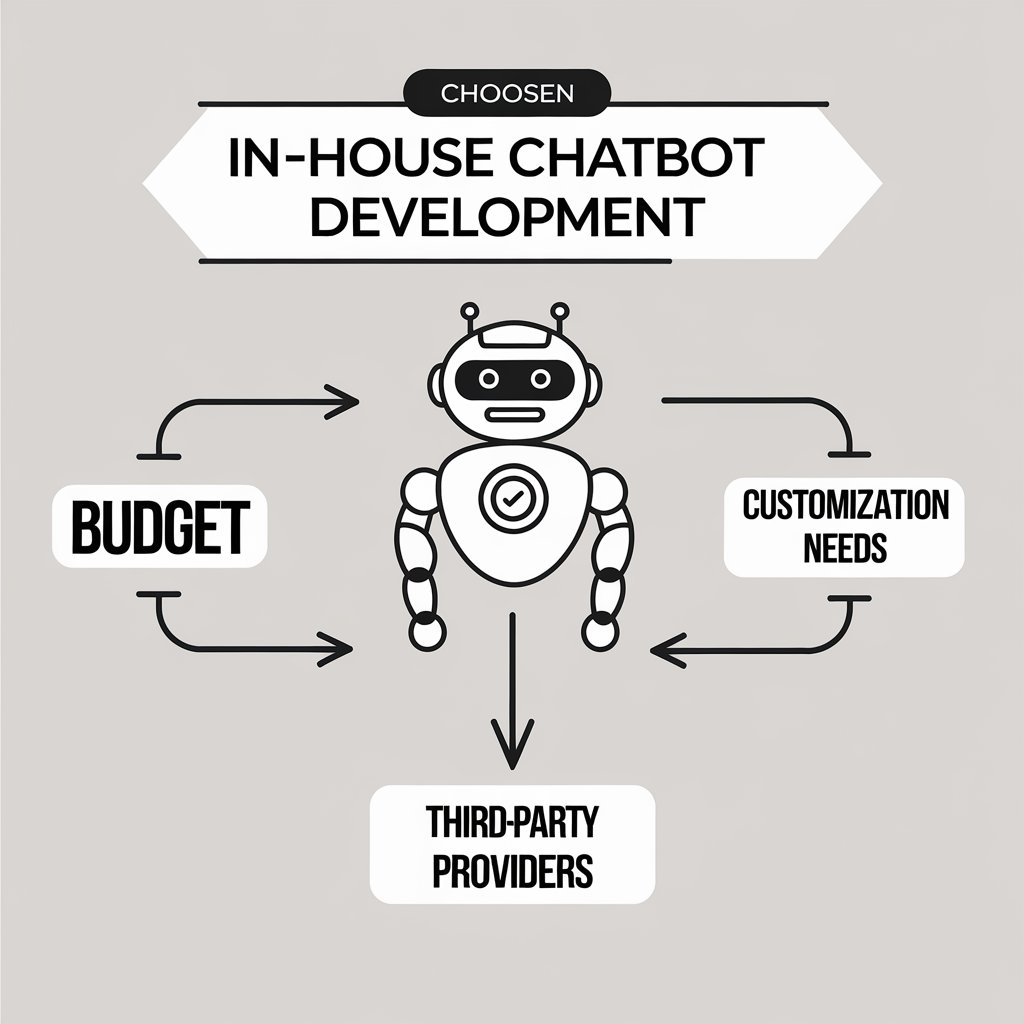
When considering the development of a chatbot solution, one of the first choices businesses face is whether to build in-house or partner with a third-party provider. Each approach has its own set of benefits and drawback.
Here’s a closer look at the differences to help guide this critical decision:
1. In-House Development
Creating a chatbot internally involves utilizing internal resources and teams to conceive, build, and manage the chatbot entirely from the ground up.
Pros:
- Companies maintain complete authority over all elements of the chatbot’s features, design, and data security.
- Internal teams can develop a chatbot that fits perfectly with the organization’s requirements, branding, and objectives.
- The company can monitor and modify development instantly, enabling swift changes in response to feedback or evolving needs.
Cons:
- Creating a chatbot internally usually demands a talented development team, specific software, and potentially new infrastructure, all of which can be expensive.
- Creating and refining a chatbot from scratch can take a considerable amount of time, necessitating substantial time commitments.
- Following development, in-house chatbots require regular updates and support, necessitating ongoing resources and specialized knowledge.
Ideal For: Companies with unique needs that cannot be satisfied by standard solutions, and possessing the budget and technical resources to maintain an internal team.
Cost Factor: High initial investment and recurring maintenance costs, though potential long-term savings may be seen if the chatbot is well-optimized.
2. Third-Party Providers
Collaborating with an external provider means delegating chatbot development to a specific company that provides pre-built or adaptable chatbot options.
Pros:
- Engaging a third-party provider is typically more economical initially because these providers usually possess pre-existing frameworks that decrease both development duration and costs.
- Due to numerous providers supplying plug-and-play options, companies can launch their chatbot faster than through internal development.
- The majority of external providers deliver continuous maintenance, updates, and technical assistance, lessening the load on internal teams.
Cons:
- When utilizing a third-party vendor, businesses may experience reduced flexibility in implementing specific customizations and may have to operate within the vendor’s limitations.
- Though initial expenses might be reduced, there could be added fees for extra functionalities, assistance, or expansion.
- Utilizing an outside provider might trigger worries regarding data management and privacy, particularly if the chatbot deals with confidential information.
- Best For: Companies needing a functional, cost-effective chatbot solution without the need for deep customization or those wanting a quick deployment option.
- Cost Factor: Lower initial cost with flexible pricing, though long-term costs may add up depending on usage and support needs.
Hidden Costs and How to Avoid Surprises
Implementing a chatbot can come with more costs than meet the eye. Here are common hidden expenses and tips to avoid them:
- Maintenance and Updates – Regular upkeep is essential. Ensure maintenance costs are clear from the start.
- Scalability – Growth often means added costs. Ask about charges for expanding features or user volume.
- Integrations – Connecting with other systems can be pricey. Confirm integration fees for essential tools.
- Training – Staff training might cost extra. Check if it’s included or if self-guided options exist.
- Customization – Extra features usually mean added costs. List custom needs upfront to avoid surprise fees.
- Data Security – Storing sensitive data safely can raise costs. Verify charges for secure storage options.
- Support – Premium or round-the-clock support may be extra. Determine if standard support covers your needs.
Conclusion
Investing in a chatbot can provide significant benefits for businesses; however, a comprehensive cost analysis is crucial to prevent unexpected expenses and maximize your budget.
Meticulous preparation and posing the appropriate inquiries from the start will assist you in discovering a chatbot that meets your requirements, adheres to your budget, and offers the enduring advantages you seek. By conducting a thorough cost analysis, you can guarantee that your chatbot investment is both wise and sustainable.
FAQs
1. What is the average cost range for implementing a chatbot AI?
The expense of deploying a chatbot AI varies greatly depending on its complexity. Simple rule-based chatbots can begin at approximately $3,000, whereas sophisticated AI-powered models might cost between $10,000 and $50,000 or higher, based on customization and functionalities.
2. How long does it take to develop a custom chatbot AI?
The time needed for development is determined by the chatbot’s complexity. Basic chatbots might be developed in a matter of weeks, whereas tailored, AI-powered solutions featuring sophisticated functions could take several months to complete.
3. Are there any free chatbot options for small businesses?
Yes, certain providers provide free or affordable chatbot alternatives that come with restricted functionalities. These are frequently adequate for managing basic tasks, but advanced features or personalization usually necessitate paid subscriptions.
4. Can a chatbot be upgraded after initial implementation?
Certainly! Many chatbots can be upgraded with new functionalities or broadened to take on more responsibilities as your company expands. Nonetheless, enhancements might incur extra expenses, so it’s advisable to consider possible future requirements when setting up initially.