

Chat conversations are a key part of customer service. They are fast, convenient and allow for quick answers to questions or concerns. But with this convenience comes a big responsibility—following the right chat conversation ethics do and don’t is essential.
The ethical guidelines not only keep interactions professional but also help build trust and loyalty with customers.
Let’s learn the essential dos and don’ts that make up ethical chat conversations and see why they matter so much for positive customer relationships.
Why Ethics Matter in Chat Conversations
Ethics in chat exchanges go beyond polite language—they form the basis of a favorable customer experience. Adhering to the chat conversation ethics guidelines, both dos and don’ts, is not solely about preventing errors; it’s also about demonstrating to customers that they are appreciated and respected.
An ethical approach to chat conversations also leads to loyalty. When customers see genuine, respectful communication they are more likely to return and recommend the brand to others. Practicing chat conversation ethics do and don’t set a brand apart from the competition.
Key Principles of Ethical Chat Conversations
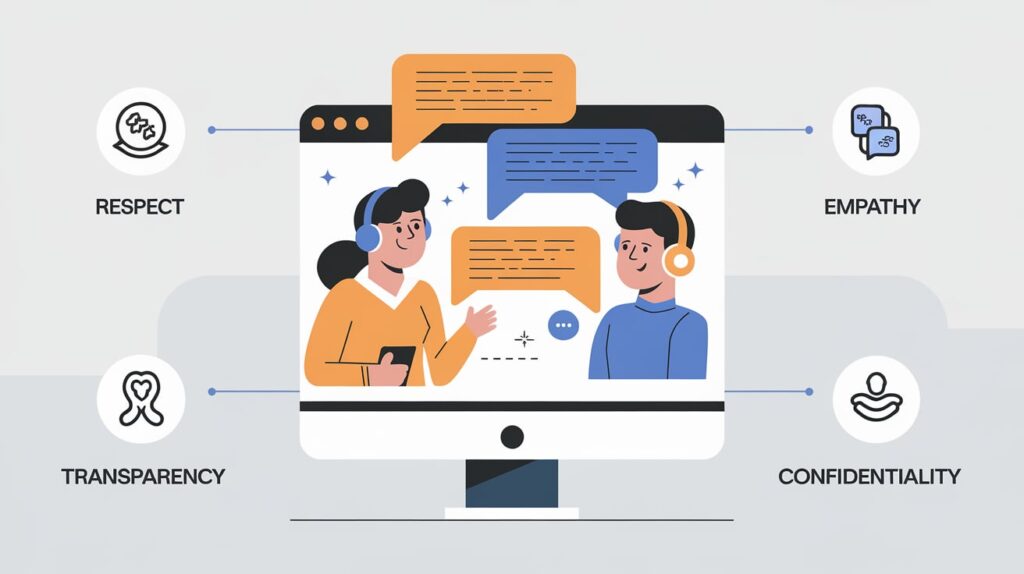
Chat conversation ethics do and don’t guidelines means sticking to core values that create positive, trustworthy interactions. Here are some essential principles that every ethical chat conversation should follow:
1. Respect
Respect is at the heart of any ethical conversation. It means treating every customer with kindness, patience, and understanding. Following chat conversation ethics do and don’t guidelines with respect helps ensure that each interaction feels genuine and valued.
2. Transparency
Being transparent and truthful regarding policies, procedures, and limitations demonstrates to customers that there are no secrets. Open communication can foster trust and facilitate customer acceptance of solutions, even when the outcome isn’t what they were expecting. This closely matches the ethical standards of what should and shouldn’t be discussed in chat conversations.
3. Empathy
Empathy lets customers know that their concerns matter. It means showing that you understand their feelings and frustrations, even in challenging conversations. By following chat conversation ethics do and don’t with empathy, you create a supportive experience where customers feel genuinely heard.
4. Confidentiality
Protecting customer information is non-negotiable. Ethical chat practices require careful handling of personal details, showing that the brand values privacy and security. This confidentiality is an essential part of chat conversation ethics do and don’t.
5. Promptness
Responding in a timely manner shows customers that their time is valued. A prompt response keeps the conversation flowing and prevents customers from feeling ignored or dismissed. In line with chat conversation ethics do and don’t, a timely reply is a small act that makes a big difference in the customer experience.
The Dos of Chat Conversation Ethics

The chat conversation ethics do and don’t guidelines begins with understanding the “dos” that make for a respectful chat experience.
Here are some essential practices to keep in mind:
1. Do Be Transparent
Honesty goes a long way. When responding to customer questions or concerns, be open about policies, product details, and any limitations. Following chat conversation ethics do and don’t with transparency builds trust and ensures customers aren’t misled.
2. Do Listen Actively
Hearing words is only part of listening—it’s about grasping the needs and worries of the customer. Active listening demonstrates to customers that they are important and promotes transparent, sincere communication. This is a key part of chat conversation ethics do and don’t that fosters a deeper connection with the customer.
3. Do Maintain Privacy
Respecting customer privacy is fundamental. Keep sensitive information secure and only use it as needed. This focus on confidentiality aligns perfectly with chat conversation ethics do and don’t standards.
4. Do Respond Promptly
Quick, courteous replies signal respect for the customer’s time and show that their concerns are a priority. By practicing promptness, you follow chat conversation ethics do and don’t principles that helps to keep the conversation flowing smoothly and efficiently.
5. Do Show Empathy
A little empathy goes a long way, especially in challenging conversations. Show customers that you understand their feelings by using kind, supportive language. Following chat conversation ethics do and don’t with empathy reassures customers and makes them feel valued.
The Don’ts of Chat Conversation Ethics
Navigating ethical conversations isn’t just about what to do—knowing what to avoid is equally crucial.
Here’s what to steer clear of:
1- Don’t Use Jargon or Complicated Language
Chat should be easy to understand. Using technical jargon or overly complicated language can confuse customers and create frustration. Sticking to chat conversation ethics do and don’t guidelines by using clear language makes the conversation smoother.
2- Don’t Ignore Complaints
Ignoring or dismissing complaints can quickly erode trust. Address every concern directly and respectfully, showing that you’re committed to finding solutions. Respecting customer feedback is a core part of chat conversation ethics do and don’t practice.
3- Don’t Make Assumptions
Assumptions can lead to misunderstandings. Avoid guessing what the customer might mean; instead, ask clarifying questions to get a clear picture of their needs.
4- Don’t Pressure for Sales
High-pressure sales tactics often backfire. Customers appreciate ethical, pressure-free interactions where they can explore options at their own pace. Respecting chat conversation ethics do and don’t here means letting customers make their own decisions, which leads to a more positive experience.
5- Don’t Share Personal Opinions
Keep the conversation professional and neutral. While friendliness is welcome, personal opinions can create unintended bias or misunderstandings. Staying aligned with chat conversation ethics do and don’t guidelines here ensures the focus remains on assisting the customer professionally.
Handling Difficult Conversations Ethically

Difficult conversations are bound to happen in customer service, but how you handle them makes all the difference. Here are some ethical practices to keep in mind when dealing with challenging situations:
1- Stay Calm and Professional
Even when customers are upset, staying calm sets a positive tone. Responding with patience and politeness keeps the conversation grounded, showing that every concern is taken seriously.
2- Acknowledge and Empathize
Acknowledge the customer’s feelings, and let them know their concerns are valid. Simple phrases like “I understand how that could be frustrating” can go a long way. Showing empathy, as outlined, helps reassure customers that they’re heard and understood.
3- Focus on Solutions, Not Blame
Shift the conversation toward solutions. Instead of dwelling on what went wrong, guide the customer toward what can be done to help. Sticking to principles means focusing on finding constructive resolutions that leave a positive impression.
4- Set Clear Expectations
Be transparent about what steps will be taken and how long it may take to resolve the issue. When customers understand the process, they’re more likely to stay patient and cooperative. Clear expectations are a key part of chat conversation ethics do and don’t, as they help maintain trust.
5- Follow Up When Needed
In cases where issues take time to resolve, a follow-up message shows commitment to customer satisfaction. This extra step, guided demonstrates that their experience matters and that their concerns are truly valued.
Conclusion
Online chat is often the first touchpoint with customers but practicing ethical conversation standards is essential. Following the chat conversation ethics do and don’t guidelines helps create meaningful, respectful interactions that leave a lasting positive impression.
Ethical chat practices aren’t just about avoiding missteps; they’re about actively choosing to treat every customer with respect. When handled correctly, even difficult conversations can become moments to reinforce a brand’s commitment to quality service.
FAQs
1. What are some signs of an unethical chat conversation?
Unethical chat conversations may include dismissive responses, pressuring customers to make quick decisions, or sharing inaccurate information. These behaviors can harm trust and make customers feel undervalued.
2. How can chat agents handle aggressive or rude customers ethically?
Staying calm, acknowledging the customer’s frustration, and focusing on solutions are key. Avoid matching their tone; instead, remain polite and professional to de-escalate the situation.
3. Why is confidentiality important in chat conversations?
Maintaining confidentiality protects customer privacy and aligns with data protection standards. It reassures customers that their information is safe, building trust in the brand.
4. How can brands ensure their chat agents follow ethical guidelines?
Brands can offer training on chat conversation ethics do and don’t standards, provide real-time feedback, and use monitoring tools to ensure agents maintain respectful and ethical interactions.
5. Can ethical chat practices improve customer loyalty?
Yes, ethical chat practices build trust and positive experiences, making customers more likely to return and recommend the brand. Respectful interactions are foundational to lasting loyalty.