
Chatbots and AI technologies are transforming the way companies engage with their clients. These tools are increasingly essential. What distinguishes a chatbot from an AI agent? Although these terms are frequently used synonymously, they each offer distinct advantages.
Let’s explore the main distinctions between chatbots and AI agents. Therefore, if you’re aiming to enhance customer service or streamline complex tasks, this guide will assist in determining which option—chatbot or AI agent—best suits your needs.
What are Chatbots and AI Agents?
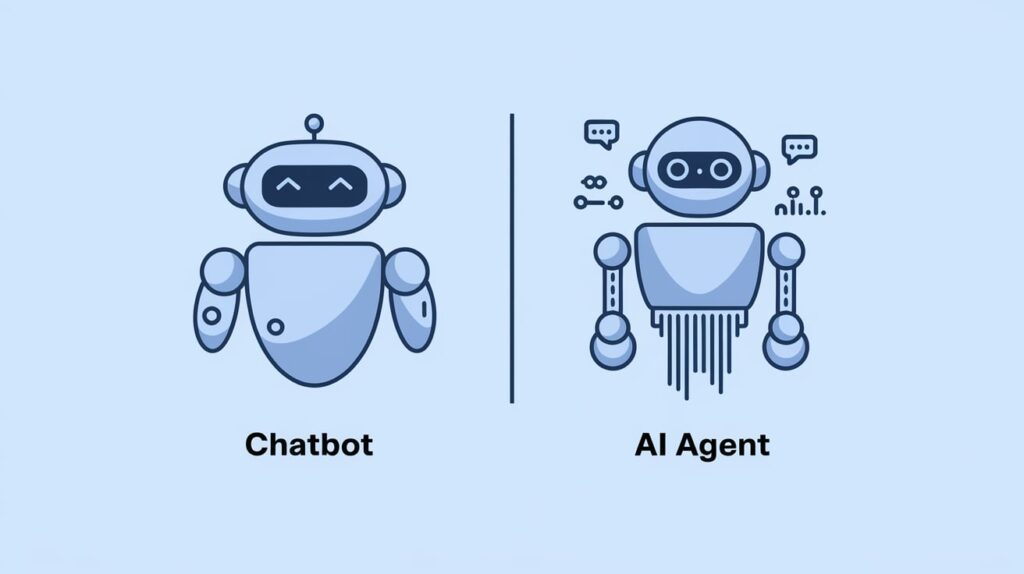
Chatbots and AI agents are both tools aimed at improving digital interactions, yet they have different functions and work with varying degrees of complexity. Chatbots are designed to answer particular inquiries, commonly utilizing set scripts or simple guidelines to direct interactions. They’re perfect for managing repetitive duties, like responding to FAQs or offering basic customer assistance.
Conversely, AI agents are more sophisticated. They employ artificial intelligence to gain insights from interactions, adjust to new circumstances, and independently make decisions. In contrast to chatbots, AI agents are capable of handling intricate tasks and delivering tailored solutions, which makes them ideal for situations that demand greater context and flexibility.
| Aspect | Chatbots | AI Agents |
| Complexity and Learning | Operate on predefined rules or scripts; cannot learn from interactions | Use machine learning to adapt and improve over time |
Level of Autonomy | Limited autonomy; follow a structured response pattern for specific tasks | High autonomy; can make context-based decisions and take independent actions |
User Interaction | Provides basic responses; limited in engaging users on deeper topics | Engages users with personalized, nuanced responses for a more interactive experience |
Applications and Use Cases | Ideal for FAQs, customer service, appointment scheduling, and basic e-commerce support | Suitable for virtual assistance, personalized recommendations, decision-making, and complex tasks |
Advantages of Chatbots vs AI Agents
Here are the Advantages of Chatbots and AI Agents in bullet points:
Advantages of Chatbots
- Chatbots are affordable solutions for managing routine tasks without extensive resources.
- They deliver instant answers to common questions, improving customer satisfaction.
- Chatbots are simple to set up for specific, repetitive tasks, like handling FAQs, booking appointments, or basic customer support.
- Ideal for straightforward, repetitive interactions that don’t require complex processing.
Advantages of AI Agents
- AI agents learn from interactions, allowing them to adapt over time for more refined responses.
- They make independent decisions based on context, which is helpful in dynamic situations.
- AI agents provide more personalized interactions, offering nuanced responses based on individual user needs.
- Suitable for use cases like virtual assistants, recommendation engines, and other tasks needing adaptability and decision-making.
When to Choose Chat Bots vs. AI Agents
Deciding between chatbots and AI agents depends on your business needs and the complexity of tasks you want to automate. Here’s a quick guide to help:
Choose Chatbots if:
- You need a cost-effective solution for managing high volumes of routine, repetitive tasks.
- Your primary goal is to quickly answer common questions, like in customer support or FAQ sections.
- The interactions required are straightforward with limited need for personalization or context-aware responses.
- You are looking to implement a simple automation tool that doesn’t require extensive training or customization.
Choose AI Agents if:
- You require a more advanced, adaptable solution that can learn from interactions and improve over time.
- Your business needs context-aware responses, such as personalized recommendations or proactive customer engagement.
- The tasks are complex and may require decision-making abilities or independent actions.
- You are looking to provide a highly interactive, customized user experience that can adapt to individual users’ needs.
Implementing Chatbots and AI Agents in Your Business

Integrating chatbots or AI agents into your business can significantly enhance customer interactions, streamline processes and improve efficiency.
Here’s a guide to help you get started with each:
1- Define Your Goals
Clearly outline what you want to achieve with automation. Are you looking to improve customer support, enhance user engagement, or streamline routine tasks? Identifying your objectives will help determine whether a chatbot or AI agent is a better fit.
2- Choose the Right Platform
Numerous platforms are available to build chatbots and AI agents, each with varying capabilities. For chatbots, platforms like Dialogflow and ManyChat offer user-friendly options for handling straightforward interactions. If your needs are more complex, consider AI solutions with advanced learning abilities, like IBM Watson or Microsoft Azure’s AI tools.
3- Design User-Friendly Interactions
Focus on creating clear, easy-to-navigate interactions. For chatbots, ensure questions and responses are simple and direct. With AI agents, aim for a more conversational and adaptive approach that responds to user behavior and preferences.
4- Train and Test the System
Testing is crucial to ensure smooth and reliable interactions. For chatbots, test all potential user questions and make sure responses meet user expectations. Ongoing training with real user data can improve accuracy and adaptability.
5- Monitor and Optimize
After implementation, regularly monitor performance. Track metrics like user satisfaction, response times and task completion rates. For AI agents, periodic retraining and updates are essential to keep the system responsive and relevant.
Conclusion
Selecting the appropriate automation tool can significantly impact the effectiveness of your business’s interactions with customers. Chatbots and AI agents each provide distinct advantages.
Recognizing these differences can assist you in matching your selection with your business objectives, whether you intend to offer immediate assistance for frequent questions or develop a more interactive, context-sensitive user experience. By utilizing effective planning and strategies, introducing chatbots or AI agents can enhance your business, optimize operations, and build stronger relationships with your audience.
FAQs
1. Can chatbots and AI agents work together in a business?
Indeed, chatbots and AI agents can enhance one another. For example, a chatbot might address simple questions, whereas an AI agent deals with more complicated issues, fostering a smooth user experience throughout different interaction levels.
2. What skills or resources are needed to maintain chatbots and AI agents?
Maintaining chatbots typically requires basic programming knowledge for updates. However, AI agents require more advanced skills in AI and data management to ensure they continue learning and adapting effectively.
3. Are chatbots and AI agents secure for handling customer data?
Both can be secure if implemented with proper data privacy measures. AI agents, however, often require additional safeguards due to their access to complex, personalized data, which may include sensitive information.
4. How long does it take to implement a chatbot or AI agent?
Deploying a chatbot may require a timeframe ranging from several days to several weeks, based on its complexity. AI agents generally need several months for setup, training and testing because of their advanced capabilities before becoming fully operational.