
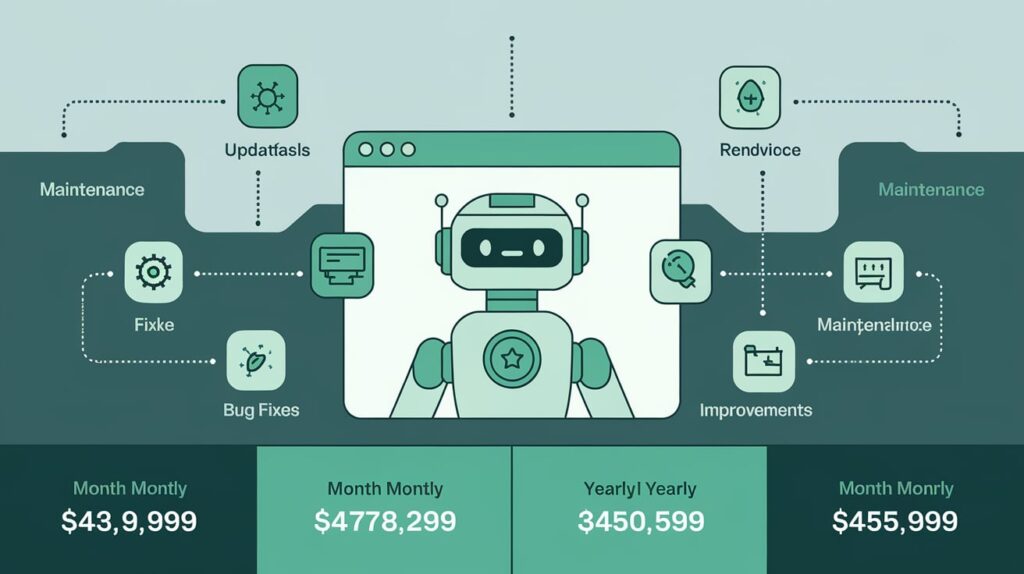
If you’ve been exploring digital tools to streamline customer service, marketing or sales then you have probably come across chatbots. They are everywhere from websites to social media platforms to help customers get quick answers. One big question might pop up in your head: What’s the actual cost of a chatbot?
In this article, we will analyze the expenses of chatbot choices, addressing everything from simple bots to tailored AI-driven systems. We will discuss all the elements influencing pricing, from initial setup to continuous maintenance, allowing you to gain a clear understanding of what meets your business requirements and budget.
Why Should You Invest in a Chatbot?
Chatbots are transforming how companies engage with clients, and there’s a solid reason they are emerging all over. Chatbots are not merely technological novelties—they are essential resources that can conserve both time and money. However, since the price of chatbots depends on their features and complexity, it is crucial to recognize why this investment can be valuable.
To begin with, chatbots offer immediate assistance. Bots can provide assistance around the clock, responding to questions, managing inquiries, and even processing orders autonomously. This indicates that customers are not required to wait until office hours to receive assistance.
An additional significant advantage is saving money. In comparison to employing full-time support personnel, a chatbot can greatly lower customer service expenses while managing a large number of inquiries. Additionally, bots don’t experience fatigue, require no rest, and can support numerous customers simultaneously, enhancing efficiency.
Types of Chatbots and Factors That Influence Their Cost
Understanding the cost of chatbot options requires knowing the different types available and the factors that drive their pricing. Let’s learn the main types of chatbots and explore what impacts their costs.
1. Rule-Based Chatbots
Rule-based chatbots, also known as decision-tree bots, operate on pre-set rules and structured flows. They are like a well-planned menu where users choose options. These bots work well for simple tasks like answering frequently asked questions or handling straightforward requests.
- Cost Impact: These are typically the most budget-friendly because they don’t require advanced AI. The setup involves creating decision paths and scripts.
2. AI-Powered Chatbots
AI-powered chatbots are more advanced, using natural language processing (NLP) and machine learning to understand complex language and user intent. They can interpret open-ended questions, learn from user interactions, and provide more dynamic responses. Businesses often use these for customer service, lead generation, and personalization.
- Cost Impact: The cost of chatbot with AI is higher due to the need for data integration, machine learning and continual improvements. The advanced capabilities drive up the price but they deliver a more flexible and intuitive user experience.
3. Hybrid Chatbots
Hybrid chatbots blend rule-based and AI-powered features. They use rules for routine tasks while applying AI for complex questions. For example, a hybrid chatbot might follow a script for common questions but switch to AI when users ask open-ended questions.
- Cost Impact: These are typically mid-range in cost, as they combine simple scripting with AI capabilities. They’re a great option for businesses wanting flexibility without the full expense of a pure AI chatbot.
Breakdown of Chatbot Pricing by Development Approach

The cost of chatbot development varies depending on the approach you choose. Whether you go for a pre-built solution, custom-built chatbot or a hybrid, each option has its pricing range and associated benefits.
Let’s look at each approach to help you understand the costs involved.
1. Pre-Built Chatbot Platforms
Pre-made chatbots, referred to as SaaS (Software as a Service) chatbots, are managed on external platforms and offer fast, cost-effective solutions for companies. These solutions are frequently provided in tiered pricing structures.
- Basic Plans: Ranging from approximately $15 to $50 each month, basic plans provide essential features such as simple conversation flows, restricted customization, and fundamental analytics. This choice is effective for small enterprises or companies that are new to chatbots.
- Pro Plans: With prices between $50 and $500 each month, these plans provide enhanced features such as CRM integrations, analytics, and greater customization choices.
- Enterprise Plans: For bigger companies, enterprise plans begin at approximately $600 monthly and may exceed $5,000. These offer significant customization, comprehensive features, and specialized support.
- Who It’s Suitable For: Companies that seek fast implementation and don’t necessitate significant personalization.
- Cost Effect: Reduced initial costs along with recurring monthly charges, perfect for companies aiming to manage expenses while expanding when necessary.
2. Custom Chatbot Development
For companies with particular demands, bespoke chatbots are created from the ground up, customized to fit distinct requirements and frequently incorporate more sophisticated elements such as machine learning and natural language processing.
- In-House Development: Opting to create a chatbot in-house requires a committed team that includes developers, UX designers, and project managers. Expenses may vary between $10,000 and $20,000 each month, covering wages, equipment, and supplies. This method offers complete control but demands a considerable investment of time and resources.
- Outsourced Development: Engaging a dedicated agency or freelancer for bespoke development typically ranges from $1,000 to $5,000 monthly, based on the bot’s intricacy and required functionalities. This choice offers access to specialized knowledge without the expenses of permanent staffing.
- Who It’s Ideal For: Organizations with targeted objectives that aren’t addressed by off-the-shelf solutions, or enterprises requiring intricate functionalities and extensive personalization.
- Cost Implications: Increased upfront investment, with fluctuating costs depending on the features and functionalities of the chatbot.
3. Hybrid Chatbot Solutions
Hybrid chatbots merge ready-made components with tailored functionalities. These bots utilize templates and structures from existing solutions but can be tailored to fulfill specific needs, achieving a balance between cost-effectiveness and functionality.
- Cost: Hybrid chatbots generally vary from $500 to $2,000 monthly, based on the extent of customization needed. They tend to be less expensive than completely customized bots while providing greater adaptability than a typical pre-built option.
- Who It’s Best For: Businesses needing a tailored solution without the high cost of fully custom development, and for those wanting a quick deployment with specific custom features.
- Cost Impact: Mid-range costs, with the ability to add specific functionalities that align with business goals.
4. AI-Powered Chatbots with Advanced Features
Chatbots powered by AI utilize machine learning, natural language processing (NLP), and predictive analytics to comprehend intricate user inquiries and modify their replies accordingly. These bots are perfect for managing intricate customer interactions and delivering tailored experiences.
- Pricing: Creating a sophisticated AI-driven chatbot can vary from $100,000 to $200,000 or higher, plus extra expenses for data assessment, routine updates, and continual enhancements.
- Ideal For: Large organizations or businesses that need exceptionally smart chatbots to handle intricate interactions and deliver tailored, personalized replies.
- Cost Implication: Substantial upfront expense, yet provides considerable long-term benefits for companies requiring intricate, adaptable solutions.
In-House vs. Outsourced Chatbot Development Costs
When evaluating the expenses involved in chatbot development, a key choice is whether to create it internally or hire an agency or development team. Every option presents distinct benefits, and the decision relies on your business requirements, financial constraints, and available assets. Let’s examine the differences in costs between in-house and outsourced chatbot development and the factors to consider for both methods.
In-House Chatbot Development
Building a chatbot in-house means using your internal team or hiring new developers specifically for this project. This approach gives you complete control over every stage of development and customization.
- Cost Impact: In-house development typically requires a substantial upfront investment if new talent is needed. Costs include salaries, benefits, software tools and ongoing training. Plus, the development process may take longer if the team is less experienced in chatbot technology.
- Advantages:
- Full control over design and customization.
- Easier to make continuous updates and adjustments in real-time.
- Internal knowledge and expertise stay within the company.
- Challenges:
- High initial and ongoing costs.
- Requires significant time and resources for development and maintenance.
- Limited access to the latest industry tools unless heavily invested in.
Outsourced Chatbot Development
Outsourcing means employing an expert agency or development group to develop your chatbot. This method can provide rapid access to industry knowledge, sophisticated tools, and efficient processes without increasing your internal workload.
- Cost Implications: Although the price of outsourcing can vary significantly, it usually leads to reduced expenses in comparison to internal development, particularly for smaller projects. Agencies generally offer a straightforward cost estimate depending on the chatbot’s intricacy and necessary functionalities, simplifying the budgeting process.
- Advantages:
- Access to specialized expertise in chatbot technology and AI.
- Faster development time due to dedicated teams.
- Lower upfront investment, especially for small to medium-sized projects.
- Challenges:
- Limited control over day-to-day progress and specific customizations.
- Potential communication barriers that may affect project alignment.
- Possible additional costs for post-launch maintenance and support.
Conclusion
Investing in a chatbot can reshape how your business engages with customers, but grasping the expenses of chatbot creation is crucial for making the best decision.
In the end, the ideal chatbot for your business relies on your objectives, budget, and required functionalities.
If you’re prepared to examine your choices or require a customized solution, contact us to find the most suitable chatbot strategy for your business requirements.
FAQs
1- What are the hidden costs associated with chatbot development?
Hidden costs can include integration fees if the chatbot connects with other systems (like CRMs or e-commerce platforms), ongoing maintenance costs for updates and improvements, and potential fees for added features post-launch.
2- How does chatbot language support affect cost?
Adding multi-language support can increase chatbot costs due to additional programming, testing, and often, the need for natural language processing (NLP) in multiple languages. The more languages supported, the higher the potential expense.
3- Is there a difference in cost between text-based and voice-enabled chatbots?
Yes, voice-enabled chatbots generally cost more than text-based ones because they require speech recognition, voice synthesis and more complex natural language processing. This also includes extra testing and optimization for accurate audio responses.
4- How do chatbot analytics and reporting features impact cost?
Advanced analytics, which track user interactions, conversation quality\ and engagement, can add to the chatbot cost. These insights can be invaluable for improving the bot, but they usually come at an extra charge or higher monthly plan level.
5- Can chatbot costs be reduced by using templates?
Yes, using chatbot templates can significantly lower development costs for basic needs. Templates reduce setup time and customization which makes it an affordable option for small businesses needing a quick solution.