
Chatbots have rapidly emerged as a favored method for companies to engage with clients. They are quick, accessible around the clock, and capable of managing basic inquiries without human assistance.
However, everyone here encounters an issue where chatbots do not consistently function as intended. Consider the most recent occasion when you attempted to communicate with a bot, only for it to misinterpret your inquiry or provide an unrelated response. It can be annoying and may lead to a loss of confidence in the company.
That’s why frequent chatbot testing is important. This process makes sure a chatbot can respond accurately and smoothly to real user interactions. Testing ensures that the bot understands various ways people might phrase questions, responds logically and handles high-traffic situations without crashing.
Why Chatbot Testing is Essential
Testing chatbots is crucial as it guarantees they operate effectively and provide correct answers, directly influencing customer satisfaction. If a chatbot isn’t adequately tested, it may misinterpret inquiries, provide wrong responses, or even become unresponsive during peak traffic.
Testing addresses these issues by making sure the bot recognizes a wide range of user inputs, handles real-world situations and performs reliably. This improves the overall user experience, helps retain customers and reduces the need for human support on basic queries.
Key Types of Chatbot Testing

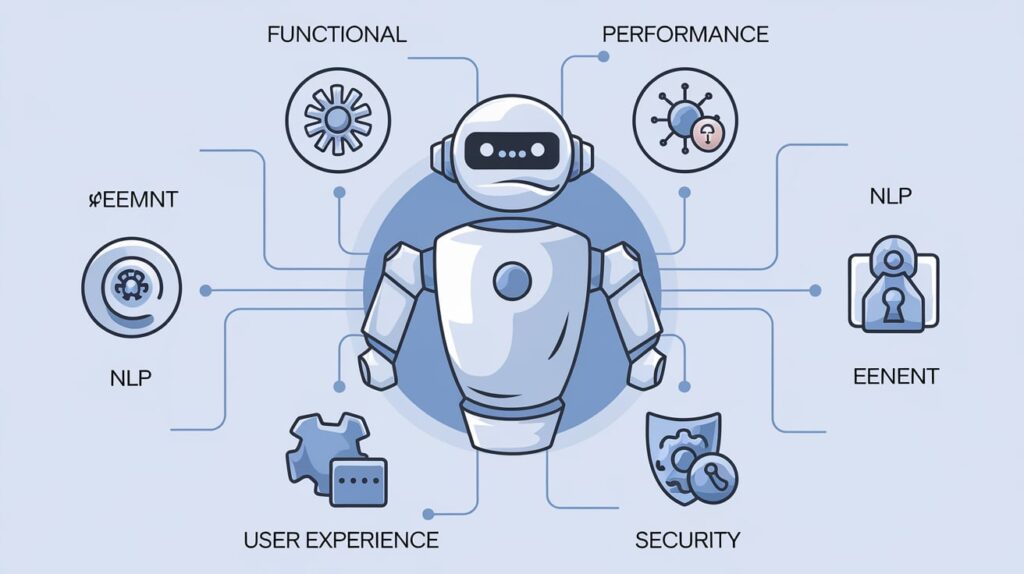
Effective chatbot testing covers several key types, each essential for ensuring a chatbot performs as expected. Let’s look at the main types of chatbot testing that contribute to a smooth and reliable user experience:
Functional Chatbot Testing:
This type ensures that the chatbot handles essential tasks and user interactions correctly. Functional testing verifies that the bot gives accurate responses, follows the intended conversation flow and doesn’t freeze or misinterpret commands. Functional chatbot testing is crucial for making sure the boy meets basic user expectations.
Performance Testing for Chatbots:
Performance testing examines how the chatbot functions under heavy loads or during high-traffic periods. Performance testing ensures the bot doesn’t slow down or crash. Performance testing for chatbots is essential for maintaining a stable experience during busy times.
NLP Testing for Chatbots:
Given that chatbots depend on natural language processing (NLP) for comprehending user inquiries, NLP testing evaluates the bot’s ability to interpret various expressions, colloquialisms, and mistakes. Testing NLP for chatbots is essential for fostering a natural, human-like interaction that users find intuitive.
User Experience (UX) Testing for Chatbots:
This kind of chatbot testing emphasizes the interactions between actual users and the bot. UX testing assesses the ease, intuitiveness and enjoyment of using the chatbot, while collecting feedback to pinpoint areas that need enhancement.
Security Testing for Chatbots:
Security testing ensures that the chatbot is safe and protects sensitive user data. Security testing for chatbots helps prevent hacks or data breaches, building user trust in the process.
Essential Steps in Chatbot Testing
You must go through a series of essential testing steps for a chatbot to perform effectively . These steps help ensure the bot is reliable, accurate and user-friendly. Here are the essential steps in chatbot testing:
- Define Use Cases: Identify the primary tasks the chatbot should handle. Defining specific use cases helps testers understand what users are likely to ask and ensures the chatbot can respond appropriately.
- Build Test Cases: Test cases are scenarios or questions the chatbot might encounter from users. Testers can check if the bot handles different requests correctly. This step is crucial for covering a wide range of potential user inputs.
- Test for NLP Accuracy: Since chatbots rely on Natural Language Processing (NLP) to understand user queries, this step focuses on testing how well the bot interprets varied language, slang and phrases. Testing NLP accuracy ensures the bot responds accurately to different ways users might phrase a question.
- Evaluate User Flow: Testing isn’t just about the bot’s responses; it’s also about the conversation flow. This step involves ensuring that the chatbot guides users smoothly through interactions.
- Iterate Based on Feedback: After initial testing, real user feedback is invaluable. This step includes analyzing feedback to make improvements, fine-tuning the bot’s responses and adjusting any areas where users faced difficulties.
Why Work with Experts in Chatbot Testing

While testing might seem straightforward, chatbot testing requires expertise to truly make a difference. Here’s why partnering with professionals can elevate your chatbot’s performance:
- In-Depth Knowledge: Experts in chatbot testing understand the technical and conversational complexities. They know how to test for various user scenarios, from functional performance to natural language accuracy.
- Customized Testing Solutions: Professionals offer tailored testing strategies that meet your chatbot’s unique needs and align with your business goals. They can design test cases that address your industry’s specific requirements.
- Efficient Issue Detection: Experienced testers know where to look for potential problems, helping to identify and fix issues early on. This means fewer glitches, better performance and a smoother user experience when the chatbot goes live.
- Cost and Time Savings: Working with experts can speed up the testing process and reduce long-term costs. Professional testers save you time and resources down the road by catching errors early and optimizing the bot’s functionality.
- Reliable Results: Expert testers use proven methods and tools to deliver reliable, consistent results. You can trust that your chatbot will work as expected which enhances your brand’s credibility and user satisfaction.
Conclusion
Testing chatbots is crucial for any company aiming to deliver a smooth, interactive customer experience.
Collaborating with specialists in chatbot testing can enhance these benefits even more, providing your chatbot with the dependability and effectiveness required for success. Investing in thorough testing is a wise decision that improves user experience while also bolstering your brand’s reputation.
FAQs
1- What tools are used for chatbot testing?
Ans: Common tools include Botium for simulating user interactions, Dialog Flow’s built-in tester for NLP and TestMyBot for automated testing across platforms.
2- How often should a chatbot be tested?
Ans: Regularly—ideally every few months or after updates to ensure it meets current user expectations and handles new language patterns.
3- Can chatbot testing be automated?
Ans: Yes, many aspects can be automated, like functionality and load testing, using tools such as Rasa Test and TestMyBot.
4- How long does chatbot testing take?
Ans: It varies by both complexity but generally takes a few days to a few weeks, depending on the scope of testing required.
5- What’s the difference between chatbot training and testing?
Ans: Training teaches the bot to understand user intents while testing ensures the bot works correctly under different scenarios and delivers a reliable experience.