

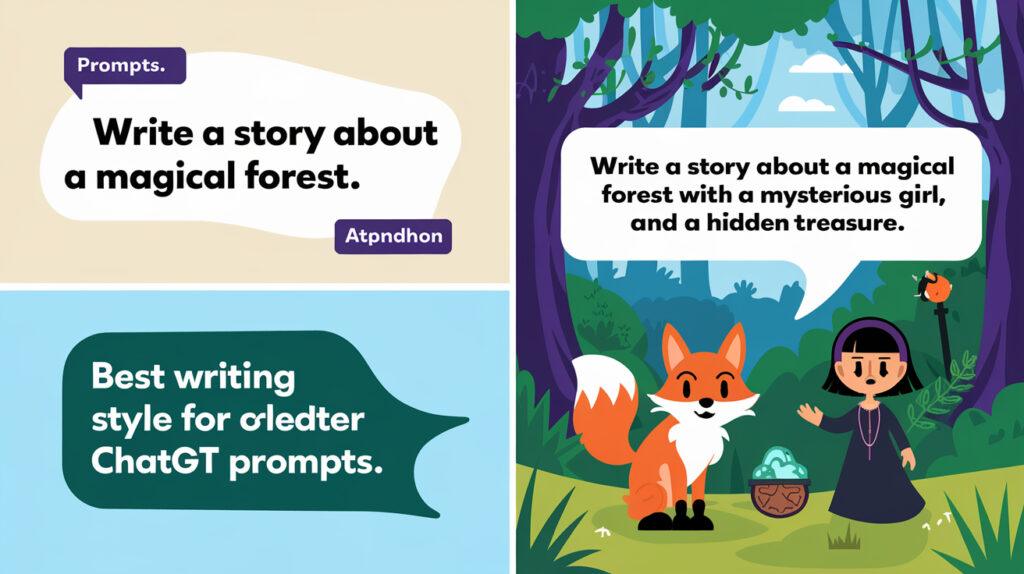
Ever asked ChatGPT a question and got a weird answer that didn’t help at all? It happens! The key to receiving quality responses depends on the way you inquire. An articulate, well-crafted prompt can determine whether you receive an ideal response or one that confuses you.
A well-crafted prompt enables ChatGPT to provide you with precise and relevant responses promptly. In the era of AI, understanding how to interact with these tools can truly transform the landscape.
Allow us to guide you through the most effective writing techniques for ChatGPT prompts.
What Constitutes an Effective ChatGPT Prompt?
You may be wondering what really defines a good ChatGPT prompt? Consider it as if you’re asking a friend for guidance—you wouldn’t simply say help and assume they understand precisely what you’re referring to. It’s identical to ChatGPT!
Employing the most effective writing style for ChatGPT prompts involves being clear, straightforward, and precise, enabling the AI to understand precisely what you need.
Here’s how you can create better prompts:
- Be Clear
ChatGPT works best when you are clear about what you’re asking. Instead of something vague like tell me about SEO. Try what are the main benefits of SEO for small businesses?. This way you will get a more specific answer that’s actually helpful.
- Keep It Simple
Don’t over complicate your prompt. ChatGPT responds best when you keep things short and to the point. Think of how you’d explain your question to a friend in one sentence—that’s usually the best writing style for ChatGPT prompts.
- Focus on One Thing at a Time
Asking too many questions at once can make ChatGPT’s response less clear. Focus on one question per prompt to get a precise answer.
The best writing style for ChatGPT prompts is like a road map. When you are clear and specific, you can train ChatGPT straight to the answer you need.
Keep It Clear and Simple
For ChatGPT writing prompts, simplicity is key. ChatGPT isn’t psychic—it performs better when your request is straightforward. Consider it akin to providing directions: the clearer you are, the quicker and more precisely you’ll arrive at your goal.
The best trick is to stick to clear and direct language. Avoid fancy words or long-winded sentences. The best prompts feel like you’re explaining something to a friend in one or two short sentences. This style keeps things focused and helps ChatGPT give you the answers you actually want.
Be Specific to Get Specific Answers

To obtain helpful responses from ChatGPT ensure that your prompts are precise. The more information you provide, the better ChatGPT can comprehend your request. Ambiguous questions can result in ambiguous answers, whereas precise inquiries typically provide you with exactly what you require.
Consider it like this: ChatGPT acts as a supportive helper, yet it depends on the information you give. You will direct ChatGPT to provide you with precise and relevant responses consistently by emphasizing what you truly wish to learn.
Use Natural Language for Natural Responses
To achieve optimal results, converse with ChatGPT as if you are speaking to a friend. Employing simple and common language allows ChatGPT to grasp your meaning more effectively and reply in a manner that seems authentic and pertinent. There’s no requirement for sophisticated language or intricate expressions; just maintain a straightforward and informal tone.
Using natural language increases the chances that ChatGPT will provide responses that are coherent and human-like. Therefore, phrase your prompts as you would normally talk, and you will receive answers that seem warm, straightforward, and concise.
Avoid Overloading with Too Many Questions
ChatGPT works best when you keep things focused. If you try to ask too many questions at once the response can get messy or miss key details. Sticking to one question at a time will help you give ChatGPT the chance to answer fully and accurately.
Think of it like a conversation—when you pile on questions, it’s hard to keep up. But when you focus on one thing you get a much clearer answer. So, take it one question at a time and you will get responses that are easy to understand and straight to the point.
Adjust Tone Based on Desired Response
The style of your prompt can influence the type of answer you receive from ChatGPT. Looking for a warm response? Of course! Please provide the text you’d like me to paraphrase.
Looking for something more polished? Certainly! Please provide the text that you would like me to paraphrase. ChatGPT is capable of adjusting to various tones, but it requires some direction from you.
Consider ChatGPT as a mirror—it mirrors the tone you establish. By modifying your wording to align with the type of response you seek, you can steer ChatGPT to reply in a manner that suits your needs perfectly.
Troubleshooting Common Issues with ChatGPT Responses

Sometimes, ChatGPT’s responses might not be exactly what you expected. Maybe the answer feels too vague or it misses the mark. Don’t worry! There are simple ways to fix common issues and get better results.
- If the Response is Too General then try making your prompt more specific. Adding a few details can help ChatGPT understand exactly what you’re looking for.
- If the Answer is Off-Topic then double-check that your question is clear and focused. If needed, rephrase it to guide ChatGPT back to the right topic.
- If the Response Feels Too Short or Brief then you can ask ChatGPT to “explain further” or “go into detail.” This encourages the AI to give a more in-depth answer.
Conclusion
ChatGPT writing prompts may appear straightforward, yet a bit more effort can make a significant difference. Being precise, detailed, and employing everyday language will assist you in receiving responses that are correct, useful, and straightforward.
Keep in mind that the most effective writing approach for ChatGPT prompts is clear and concentrated, directing the AI to reply exactly as you desire.
Whether you’re utilizing ChatGPT for professional tasks, education, or simply to explore, these suggestions will assist you in maximizing each interaction.
FAQs
1. How can I make ChatGPT understand my industry-specific questions?
Be as specific as possible. Use terms and details relevant to your industry to guide ChatGPT’s responses closer to your field of interest.
2. Can I use ChatGPT to generate creative ideas?
Yes! ChatGPT can be a great brainstorming tool. Just set the tone by asking for “creative” or “unique” ideas, and it can offer fresh perspectives.
3. How do I get ChatGPT to answer in a conversational tone?
Use natural, friendly language in your prompt, and ask for a “conversational” response. ChatGPT often mirrors the tone you set.
4. What’s the best way to correct a response if ChatGPT misunderstood my question?
Try rephrasing or adding more context. Clearer details or a slightly different approach in your prompt can help ChatGPT understand better.